
You may have noticed staining to the walls of your property, deterioration of plaster, mould growth or a persistent musty smell. Perhaps you have already had remedial works carried out but the problem has returned.
Understandably, most homeowners want to know what they need to do to resolve the problem and how much it is likely to cost.
However, before undertaking remedial works, it is important to understand what is causing the dampness. Different causes require different approaches, and carrying out inappropriate repairs can be an expensive exercise which does very little to resolve the problem.
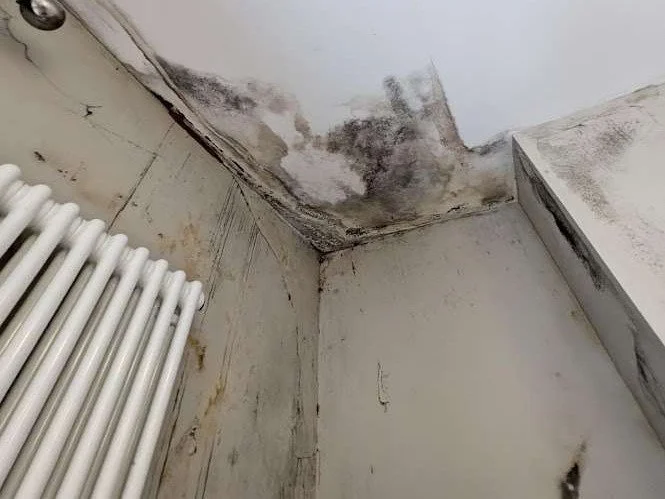
What could be causing dampness in your property?
There are a number of potential sources of moisture within a building.
Penetrating damp
Penetrating damp occurs where moisture enters a building through its external fabric. This may be associated with defects such as damaged roof coverings, deteriorated render or pointing, leaking rainwater goods or poorly sealed window and door openings.
Given the exposed nature of some properties on the Isle of Man, wind-driven rain can also be a contributing factor.
Condensation
Condensation occurs when moisture within the air comes into contact with surfaces that are sufficiently cold.
It can be associated with a combination of factors, including inadequate ventilation, heating arrangements, moisture generated within the property and the thermal performance of the building.
It is often particularly noticeable around windows, external wall corners and behind furniture where air circulation is restricted.
Rising damp
Rising damp occurs where moisture from the ground travels upwards through porous building materials by capillary action.
However, dampness at low level within a property should not automatically be attributed to rising damp or a defective damp-proof course.
Raised external ground levels, defective drainage, leaking pipework and other sources of moisture can result in similar symptoms.
Leaks
Leaks from plumbing, heating and drainage systems can also result in dampness. These can be particularly difficult to identify where pipework is concealed within walls or floors.
In some circumstances, there may be several factors contributing to the problem rather than one single cause.
Why the construction of your property matters
Many older properties on the Isle of Man are of traditional solid wall construction and manage moisture differently from more modern properties.
Traditional materials, such as stone and lime mortar, can absorb moisture and subsequently allow it to evaporate.
Where these buildings have been repaired or altered using less permeable materials, such as certain cement-based renders and impermeable coatings, their ability to dry out can be reduced.
This can contribute to dampness and deterioration of the building fabric, particularly where moisture is able to enter through defects in the external finishes.
A method of repair which is suitable for one property may therefore be inappropriate for another.
Does a high moisture meter reading mean you need damp-proofing works?
Not necessarily.
Moisture meters are useful tools when assessing dampness, but the readings need to be interpreted alongside the other findings of an inspection and a moisture meter alone can not diagnose damp or its causes.
Electrical moisture meter readings taken on masonry and plaster can be influenced by the presence of salts and the characteristics of the materials being tested.
An elevated reading alone is not sufficient to establish that a property is suffering from rising damp or that the installation of a new damp-proof course is necessary.
The distribution of the readings, visible defects, construction of the property and other potential sources of moisture all need to be considered and the issue looked at holistically rather than a single point of data.
When should you seek independent advice?
If there is an obvious cause of dampness, such as a leaking gutter or plumbing fitting, arranging the appropriate repair may be all that is required.
However, if you are experiencing persistent or unexplained dampness, have received conflicting advice or have been advised that extensive remedial works are necessary, it may be worthwhile obtaining independent professional advice before proceeding.
This is particularly important with traditionally constructed properties or where previous remedial works have failed to resolve the problem.
Depending on the circumstances, further testing, monitoring or opening up of concealed areas may be required to establish the cause and extent of the dampness.
Our advice would always be to understand the cause of the problem as far as reasonably possible before deciding on the most appropriate method of repair.
If you are experiencing issues with dampness in your property and are unsure what to do next, feel free to get in touch with us. We would be happy to discuss your concerns and advise on the most appropriate course of action.