
Finding cracks in the walls of your property can understandably be a cause for concern, particularly if they have appeared recently or you are in the process of purchasing a property.
However, cracking is not always an indication of a significant structural problem. Most buildings will experience some degree of movement throughout their lifetime, and there are a number of reasons why cracks can develop.
The important thing is to understand why the cracking has occurred, whether there are signs of ongoing movement and what implications this may have for the property.
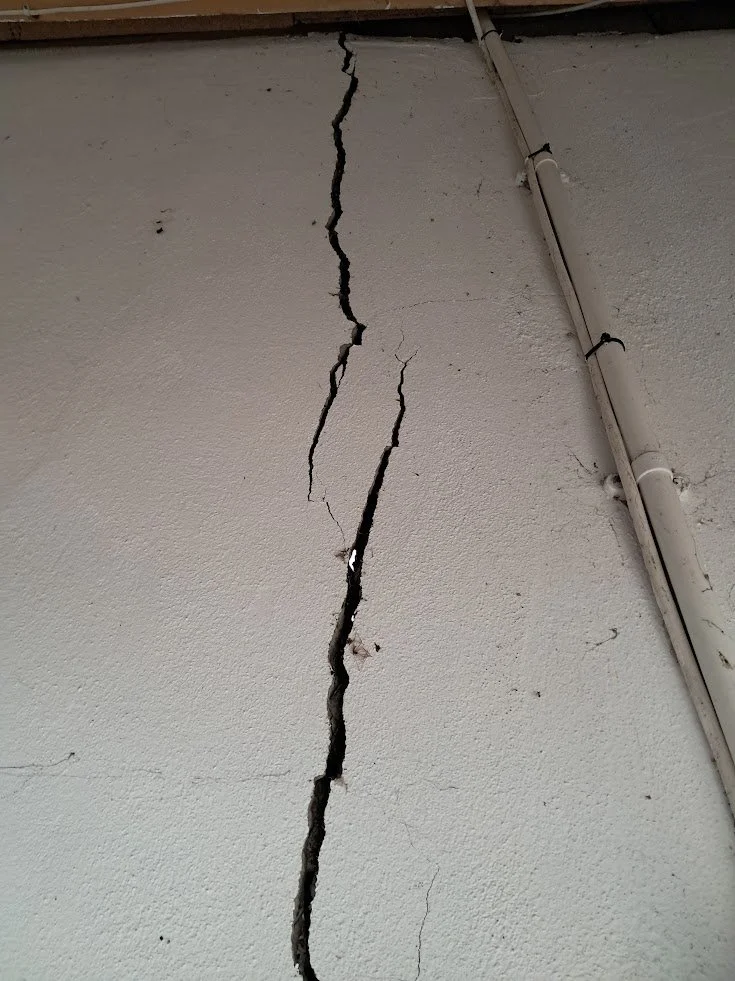
Signficant cracking found during a Home Survey
What causes cracks in buildings?
There are a number of potential causes of cracking, ranging from relatively minor issues to more significant structural defects.
These include:
Shrinkage of building materials as they dry.
Expansion and contraction of materials due to changes in temperature and moisture levels.
Differential movement between different parts of a building, particularly where a property has been extended.
Settlement following construction.
Deterioration or failure of structural elements, such as lintels above windows and doors.
Movement of the foundations due to changes in the ground supporting them.
It is also important to establish whether the cracking is confined to surface finishes, such as plaster or render, or extends into the underlying structure.
Does cracking mean you have subsidence?
Not necessarily. Subsidence is a particular form of movement associated with changes in the ground supporting the foundations of a building. It is just one of many potential causes of cracking.
When assessing cracking, a surveyor will consider its location, direction and extent, alongside the age, construction and condition of the property and whether there are any other signs of movement.
For example, cracking at the junction between an older property and a more recently constructed extension may be associated with differential movement between the two structures. This does not necessarily indicate a significant structural defect.
Similarly, cracking above a window opening may be associated with deterioration or inadequate support from a lintel rather than movement of the foundations.
When should you seek further advice?
Whilst minor cracking can often be addressed as part of the normal maintenance of a property, there are circumstances where we would recommend seeking further advice.
These include:
Cracks that have appeared suddenly or are noticeably increasing in size.
Cracking extending through external masonry and reflected internally.
Pronounced diagonal or stepped cracking.
Cracking accompanied by distortion of door or window openings.
Cracking associated with bulging or leaning walls.
Cracks that repeatedly reopen following repairs.
The width of a crack can provide useful information, but it should not be considered in isolation. The location, pattern and cause of the cracking are often just as important.
If there has been sudden significant movement or you have concerns that part of the building may be unstable, you should keep clear of the affected area and seek urgent specialist advice.
What should you do if you notice cracking?
If it is safe to do so, taking dated photographs of the cracking with a suitable scale alongside it can provide a useful record of any changes over time.
We would advise against simply filling or covering unexplained cracking without first considering why it has occurred, particularly where there are other signs of movement.
Depending on the findings of an inspection, the appropriate course of action may be relatively straightforward repairs, a period of monitoring or further investigation by a structural engineer.
If you are purchasing a property, we would recommend establishing the significance of any concerning cracking before committing to the purchase.
If you have noticed cracking in your property and are unsure whether it warrants further investigation, feel free to get in touch with us at Manx Surveyors. We can discuss your concerns and advise whether an inspection would be beneficial or whether another professional may be better placed to assist you.